
Vapor Degreasers
Vapor Degreasers
The “D” series combines the durability of Sonicor ultrasonic technology with state-of-the art emissions control and safety features to produce a line of vapor degreasing systems that are preferred by hundreds of customers worldwide. Our units can operate safely with a wide range of non-flammable degreasing solvents. Our vapor degreasers are the ultimate solution for efficient and thorough cleaning of various materials and components. Explore our line of superior vapor degreasers, which use ultrasonic cleaning technology to remove contaminants.
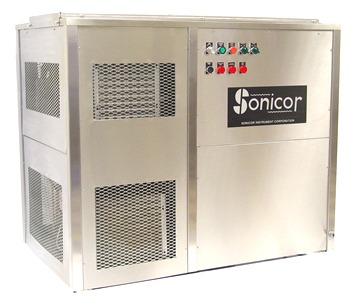
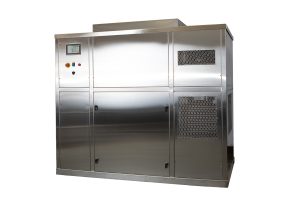
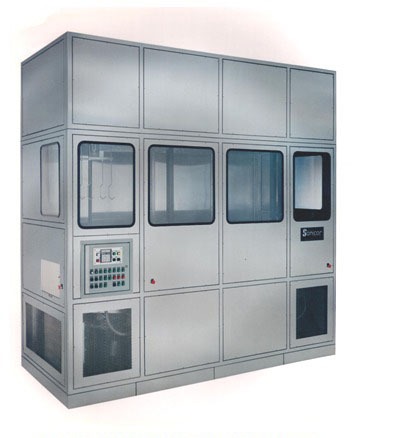
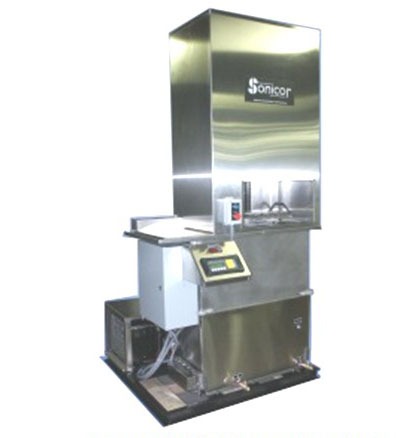
Standard Features:
- Two stage, vapor/ultrasonic degreaser with refrigerated primary condenser (Can be made without ultrasonics if that configuration better suits your needs)
- Extended freeboard ratio to minimize diffusion losses
- Manually operated sliding cover to control overhead air turbulence losses
- Water separator for continuous removal of condensed atmospheric moisture from the system
- Sonicor “Vapor Watch” safety circuit, with manual reset sensors, to monitor system functions, identify faults, and notify operator when maintenance or service is needed
- All stainless degreaser body and countertop
- Copper/Brass plumbing
- Push-button start with “Vapor-Up” light to advise operator when system is ready to process parts
- High Vapor Sensor – disables heaters and advises operator if vapors reach an unsafe height in the degreaser
- High Solvent Temp. Sensor – Monitors solvent temperature in the boil chamber, and advises operator when solvent replacement is needed
- Low Solvent Level Control – Disables heaters and advises operator if solvent level is low
- A full stainless cabinet on 7 and 10 gallon models
- Sonicor “Bandscanner” series 40KHZ ultrasonics
Available Options:
- A full stainless cabinet on 25, 50, and 85 gallon models
- All stainless solvent plumbing
- Hand held distillate spray wand
- Circulating pump/filter system on immersion chamber
- Refrigerated freeboard chiller system
- Power Cover (replaces standard manual cover)
- 30lb automated workload elevator – single axis
- 30lb automated workload elevator – dual axis
- 27, 40, or 68Khz operation
7 Gallon Vapor Degreaser
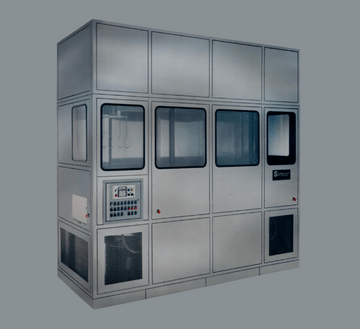
- Model CUDR-30Z
- Boil Chamber “8”x11″x6″
- Immersion I.D. 8″x11″x7 1/2″
- Vapor Zone 17″x11″x9″
- Primary Heater 1500w
- Solvent Capacity 7 Gallons
- Distillation Rate 5.5 GPH
- Workload Capacity 150 Lbs/Hr
- Ultrasonic Power 200w
- Standard Electrical Requirements 230v, 1PH, 18A, 50/60hz
- Overall Dimensions 51″x22″x46″
- Shipping Weight 350 Lbs
10 Gallon Vapor Degreaser
- Model CUDR-50Z
- Boil Chamber “10”x12″x8″
- Immersion I.D. 10″x12″x10″
- Vapor Zone 21″x12″x10″
- Primary Heater 2000w
- Solvent Capacity 10 Gallons
- Distillation Rate 7 GPH
- Workload Capacity 200 Lbs/Hr
- Ultrasonic Power 300w
- Standard Electrical Requirements 230v, 1PH, 28A, 50/60hz
- Overall Dimensions 55″x28″x48″
- Shipping Weight 500 Lbs
25 Gallon Vapor Degreaser
- Model CUDR-70Z
- Boil Chamber “12”x16″x9″
- Immersion I.D. 12″x16″x16″
- Vapor Zone 25″x16″x12″
- Primary Heater 4000w
- Solvent Capacity 25 Gallons
- Distillation Rate 14 GPH
- Workload Capacity 400 Lbs/Hr
- Ultrasonic Power 600w
- Standard Electrical Requirements 230v, 1PH, 40A, 50/60hz
- Overall Dimensions 65″x33″x48″
- Shipping Weight 700 Lbs
50 Gallon Vapor Degreaser
- Model CUDR-90Z
- Boil Chamber “16”x20″x12″
- Immersion I.D. 16″x20″x16″
- Vapor Zone 33″x20″x16″
- Primary Heater 8000w
- Solvent Capacity 50 Gallons
- Distillation Rate 28 GPH
- Workload Capacity 800 Lbs/Hr
- Ultrasonic Power 900w
- Standard Electrical Requirements 230v, 3PH, 60A, 50/60hz
- Overall Dimensions 86″x36″x60″
- Shipping Weight 900 Lbs
85 Gallon Vapor Degreaser
- Model CUDR-120Z
- Boil Chamber 20″x24″x17″
- Immersion I.D. 20″x24″x17″
- Vapor Zone 41″x24″x18″
- Primary Heater 12000w
- Solvent Capacity 85 Gallons
- Distillation Rate 42 GPH
- Workload Capacity 1200 Lbs/Hr
- Ultrasonic Power 1500w
- Standard Electrical Requirements 230v, 3PH, 80A, 50/60hz
- Overall Dimensions 108″x40″x68″
- Shipping Weight 1100 Lbs